CFM Certification in Qatar
36-hour Facility Management program
Globally recognised KHDA-accredited certification
AI & Automation Sandbox integrated training
11 modules with industry simulations and mock tests
Get trained by IFMA-certified trainers
Flexible learning options with easy instalments

 4.6/5
4.6/53780 EnrolledEnrolled Learners
4.6/53780 EnrolledEnrolled Learners
Overview
What our training includes:
- Manage daily facility operations, routine maintenance, and work support systems
- Improve tenant services while keeping up with strict safety and security standards
- Run energy, water, and waste management programs to make resource use more efficient
- Spot operational risks and set up solid plans for emergency response and business continuity
- Handle procurement, vendor contracts, and capital budgets using data-backed methods
- Read and analyse facility data using AI integration and Automation Sandbox workflows
Upcoming sessions
Curriculum
1
Workplace environment
2
Occupant services
3
Occupant health, safety, and security

AI Integration
- Analyze workplace utilization and occupancy patterns
- Support occupant experience and service improvement decisions

Activities/Case Study
- Occupant Satisfaction Improvement Initiative
1
Buildings, building systems, infrastructure, and grounds
2
Furniture, fixtures, and equipment
3
Physical safety and security
4
Operations and maintenance processes
5
Work management support systems
6
Renewals and renovations
7
Eliminating team impediments
8
Managing virtual team
AI Integration
- Analyze maintenance performance and asset reliability trends
- Support predictive maintenance and resource allocation planning
Activities/Case Study
- Critical Infrastructure Maintenance Failure
1
Energy management
2
Water management
3
Materials and consumables management
4
Waste Management
5
Workplace and site management
AI Integration
- Analyze energy consumption and sustainability performance
- Support resource optimization and environmental impact reduction
Activities/Case Study
- Green Facility Transformation Project
1
Data collection and information management
2
Information protection and cyber-security
3
Technology needs assessment and implementation
4
Maintenance and upgrade of technology systems
AI Integration
- Analyze facility performance data and operational insights
- Support smart building technology and system optimization
Activities/Case Study
- Smart Facility Implementation Project
1
Risk management planning
2
Emergency preparedness, response and recovery
3
Facility resilience and business continuity
AI Integration
- Identify operational risks and resilience vulnerabilities
- Support emergency planning and business continuity assessments
1
Planning
2
Delivery
3
Evaluation
AI Integration
- Analyze stakeholder communication effectiveness and engagement trends
- Support communication planning and reporting activities
Activities/Case Study
- Stakeholder Communication Breakdown
1
Quality Management
2
Performance Management
AI Integration
- Monitor facility KPIs and operational performance indicators
- Support quality improvement and performance evaluation initiatives
Activities/Case Study
- Service Quality Improvement Initiative
1
Strategic planning and alignment with demand organization
2
Policies, procedures, and compliance
3
Individual and team management
4
Leadership
5
Relationship and conflict management
6
Change management
7
Corporate social responsibility
8
Political, social, economic, and industry factors affecting facility management
AI Integration
- Analyze strategic facility risks and operational priorities
- Support leadership decisions and workforce planning initiatives
Activities/Case Study
- Organizational Change Management Initiative
1
Operational and capital budgeting
2
Evidence-based decision-making process (e.g. business case)
3
Procurement (e.g. purchasing, sourcing of goods and services)
4
Contracting
5
Financial analysis and reporting
AI Integration
- Analyze facility spending patterns and budget performance
- Support procurement evaluation and financial decision-making
Activities/Case Study
- Capital Investment Justification Scenario
1
Real estate strategies
2
Real estate assessment, acquisition, and disposal
3
Real estate asset management
4
Space management
5
Major projects and new construction
AI Integration
- Evaluate asset utilization and space optimization opportunities
- Support real estate planning and investment analysis
Activities/Case Study
- Facility Expansion Strategy Review
1
Planning and design
2
Execution and delivery
3
Evaluation
AI Integration
- Analyze project performance and delivery risks
- Support project planning and execution monitoring
Activities/Case Study
- Facility Upgrade Implementation Project
1
Participants assume the role of facility management leaders responsible for managing a large commercial facility portfolio.
2
Teams must balance operational efficiency, occupant satisfaction, sustainability goals, maintenance planning, risk management, financial constraints, technology upgrades, and business continuity requirements while ensuring alignment with organizational objectives and compliance standards.
3
Participants evaluate facility performance, identify operational improvement opportunities, assess workplace effectiveness, and develop integrated strategies that support long-term facility excellence and organizational success.
4
Throughout the simulation, participants apply facility management principles across operations, maintenance, sustainability, finance, risk management, technology integration, workplace services, and asset management functions.
5
Teams analyze operational data, develop maintenance strategies, optimize space utilization, evaluate sustainability initiatives, strengthen business continuity readiness, and present strategic recommendations that improve facility performance, occupant experience, and organizational value creation.
1
Identify 5–7 repetitive facility tasks (maintenance scheduling, reporting, compliance checks).
2
Redesign into AI-driven workflows with human validation checkpoints.
3
Define clear decision boundaries between AI and human oversight.
4
Select 3 areas for AI deployment with productivity justifications.
5
Identify 2 areas requiring manual control due to compliance/ethical risks.
6
Build an implementation roadmap with measurable success metrics.
7
Quantify productivity improvements (time savings, error reduction).
8
Assess risks of AI-led operations without human intervention.
9
Create a governance framework balancing automation with oversight.
10
Individual: Draft a 2–3 page AI-integrated workflow strategy.
11
Group Workshop: Build collaborative workflow charts and present integration strategies.
12
Outcome: Participants will design Copilot-augmented workflows that drive productivity while safeguarding ethics, compliance, and human judgment.
Meet your Trainer
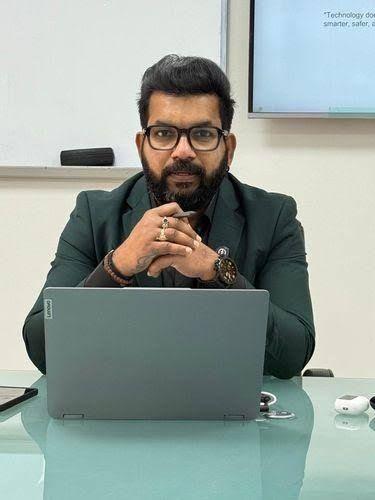
Dr. Manoj Kurup
Dr. Manoj Kurup is a distinguished Facilities Management leader with over 23 years of experience. He has been recognised among the top 50 leaders in the Middle East since 2019. His career spans Facilities Management, Health & Safety Management, Sales, and Marketing.
Dr. Kurup has driven organisational success by leading high-performing teams to surpass growth targets and excel in sales endeavours. His extensive experience in Facilities Management includes FM Operations Management, Engineering Management, and Business Development, providing invaluable insights into fostering sustainable growth and profitability.
Dr. Kurup is also a CPD-certified corporate trainer recognised by the KHDA. He empowers individuals and teams through professional certification training and leadership development. He incorporates elements of psychology, spirituality, and neuroscience in his training, offering a holistic approach to development. An accomplished author, his notable work, "Facilities Management: Red vs. Blue Ocean Strategies," is available on Amazon.
Core Competencies:
- Energy and facilities management
- Property and asset management
- Health & safety management
- Strategic planning and execution
- Leadership and team development
- Client relationship management
- Market research and product positioning
- Campaign management and revenue generation
- Contract and client management
- Performance management
- Engineering and sustainability
Professional Qualifications:
- Certified Facility Manager (CFM) - International Facility Management Association (IFMA)
- Doctorate in Business Management
- Diploma of System Maintenance Certification (SMC) - Mechanical
- International Facilities Management Association (IFMA)
- Certification Program- Sustainability Facilities Professional (SFP™)
- Diploma of Mechanical Engineering
- Certification of NEBOSH International General Certificate in Occupational Health & Safety
- Master of Business Administration (MBA) in Facilities Management
- Diploma in Facilities Management (CBIFM)
- Diploma in Facility Management
Learning Outcomes
By the end of this course, you will learn to:
1
Master strategic planning and alignment to strengthen leadership impact in facility management roles
2
Design effective change management strategies to guide organizations through operational transitions in a smooth manner
3
Build operational and capital budgets to support informed decision-making and financial accountability
4
Implement sustainable practices in energy, water and waste to reduce costs and environmental impact
5
Execute project planning, delivery and closeout processes to achieve timely and cost-efficient results
6
Manage real estate planning and functional programming to align facilities with organisational goals

KHDA Certificate
Earn a KHDA attested Course Certificate. The Knowledge and Human Development Authority (KHDA) is the educational quality assurance and regulatory authority of the Government of Dubai, United Arab Emirates.

Learners Point Certificate
Earn a Course Completion Certificate, an official Learners Point credential that confirms that you have successfully completed a course with us.

Prerequisites
For enrolling in the Certified Facility Manager (CFM®) course in Oman, you must meet one of the following eligibility options:
- Hold a Bachelor’s or Master’s degree in Facility Management & have at least 3 years of work experience in most FM domains
- Hold any other level of education (associate degree, diploma, or equivalent) & have at least 5 years of work experience in most FM domains
Overall ratings by our students
Related courses
Frequently asked questions
The CFM Certification is associated with IFMA’s internationally established facility management framework. The training program is aligned with IFMA’s globally recognised Facility Management Body of Knowledge and develops capability across the core competencies required for strategic facility leadership. As an internationally recognised credential, the CFM® is relevant to facility management professionals and employers across Qatar and other major GCC markets.
CFM training develops strategic and operational skills for professionals working across facility management functions, including:
- Facility and maintenance managers
- Property, workplace and operations professionals
- Engineers and project professionals
- Professionals handling assets, sustainability, risk or budgeting
The CFM training program in Qatar is structured around eleven core competencies outlined by IFMA. These subject areas equip professionals with both technical and strategic expertise to manage facilities effectively. Some of which are:
1. Leadership and Strategy
2. Operations and Maintenance
3. Risk Management and Business Continuity
4. Finance and Business
5. Sustainability and Environmental Stewardship
6. Communication and Stakeholder Engagement
7. Quality Management and Performance Improvement
8. Real Estate and Property Management
9. Facility Information and Technology Management
10. Human Factors and Workplace Safety
11. Project Management and Delivery
Here’s what you explore with digital twin applications using AI in this course:
1. Virtual replicas of facility assets
2. AI-supported lifecycle performance forecasting
3. Impact analysis of maintenance decisions
4. Scenario testing for building optimisation
Yes, you understand how to use AI responsibly in FM operations. You learn how data should be collected, analysed and protected.
This ensures you apply AI tools ethically while meeting organisational and regulatory standards.
You gain a unified learning structure that aligns skills, terminology and processes across departments and sites. This builds consistency and eliminates knowledge gaps that commonly impact performance.
Below are the core benefits you can expect:
- Standardized decision frameworks across facility functions
- Improved coordination between operations, maintenance and HSE teams
- Stronger alignment with enterprise-wide operational goals
The CFM certification course in Qatar is available in flexible learning formats to suit working professionals, combining instructor-led sessions, self-study resources and real-world case studies.
You gain access to official IFMA preparation materials, including study guides, sample exam questions and digital resources. At Learners Point Academy, our professionals can choose between:
1. Instructor-led classroom-based sessions
2. One-on-one training
3. Live interactive online sessions
After completing the CFM training program in Qatar, you can pursue roles such as Facility Operations Manager, Real Estate Portfolio Manager or Project Management Director. These positions provide leadership opportunities across corporate, healthcare, education and government sectors.
Some of the in-demand job roles available for our CFM-certified professionals in Qatar are as follows:
1. Facility Managers
2. Operations Managers
3. Property Managers
4. Maintenance Directors
5. Facilities Directors
The Certified Facility Manager training in Qatar lasts 36 hours. The program covers 11 major facility management areas, and it integrates instructor-led learning with practical workshops, operational case studies, strategic planning exercises, AI-supported activities, an industry simulation and an Automation Sandbox.
Do you want to learn more about Learners Point Academy?
- Learn more about courses
- Understand about our methodology
- Let’s talk about Corporate trainings
- Anything else that you want to know, we are here for you!